Pillar Guide
Marrying a Filipina: The Complete Guide
Culture, family, legal steps, and practical advice for building a lasting marriage with a Filipino woman.
Introduction: Why This Guide Exists
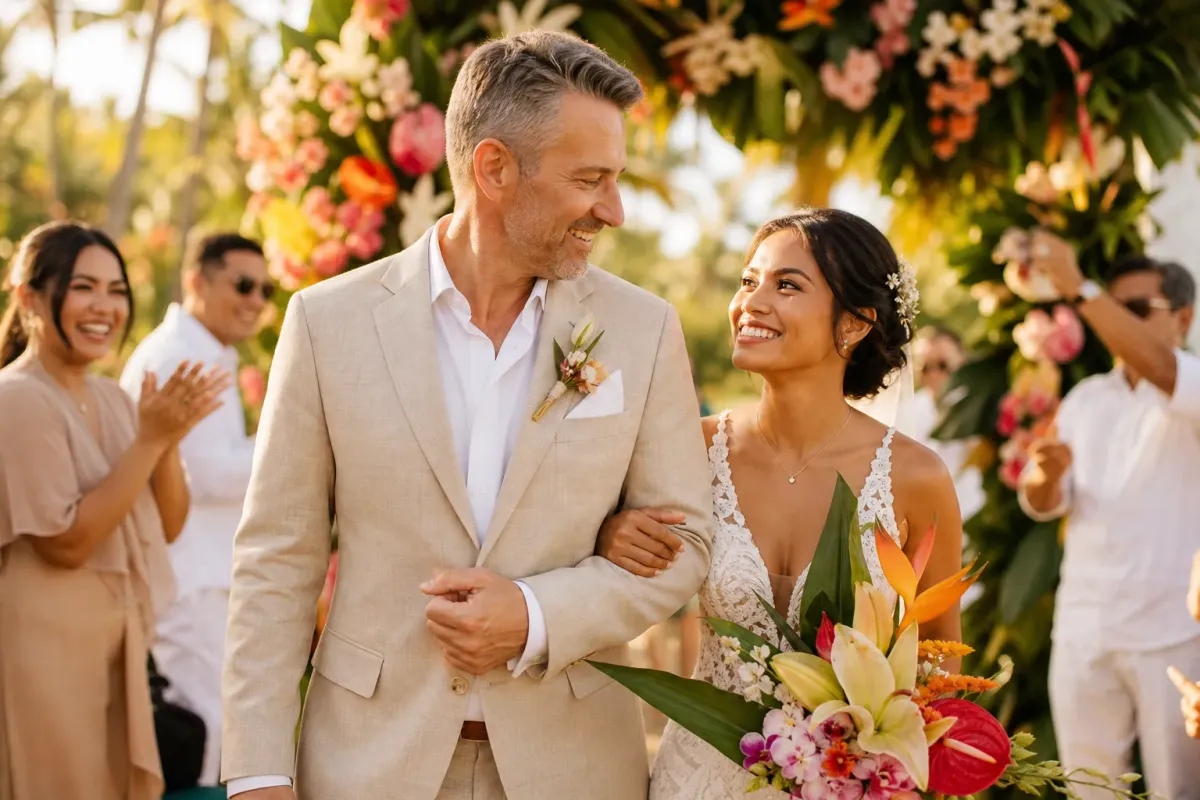
If you are seriously considering marrying a Filipina, this guide was written for you. Not as a fantasy or a shortcut, but as a practical, respectful resource for Western men who have found — or are hoping to find — a genuine life partner from the Philippines.
Cross-cultural marriages between Filipino women and foreign men are increasingly common, and many of them thrive. But like any marriage, they require honest communication, shared values, and realistic expectations. The cultural gap between the Philippines and Western countries is real, and ignoring it does not make it disappear. Understanding it, however, gives your relationship the strongest possible foundation.
This guide covers the full journey: from understanding what Filipinas value in a partner, through cultural expectations and family dynamics, to the practical realities of legal processes, immigration, and building a lasting marriage across cultures. Along the way, you will find links to more detailed guides on specific topics.
Whether you are already in a relationship with a Filipina or just beginning to explore the possibility, the goal here is the same — to help you approach this with the seriousness, respect, and preparation it deserves. For a broader introduction to dating Filipino women, start with our guide on how to date a Filipina.
Understanding What Filipinas Value in Marriage
One of the most important things you can do before proposing to a Filipina is understand what marriage means to her — not in the abstract, but through the lens of Filipino culture and values.
Loyalty and Commitment
Filipinas generally take marriage vows seriously. Divorce is not legally available in the Philippines (annulment exists but is expensive and difficult to obtain), which means that for most Filipino women, marriage is understood as a lifelong commitment from the start. This cultural reality shapes how Filipinas approach relationships: they tend to invest deeply and expect the same level of loyalty in return.
This commitment-oriented mindset is one of the reasons many foreign men are drawn to Filipina partners. For a deeper look at this quality, read our post on Filipinas’ view on long-term commitment.
Family as a Core Value
Family is not just important in Filipino culture — it is central to identity. A Filipina’s sense of self is closely tied to her family relationships. When she marries you, she is not just joining your life; she is extending her family network to include you, and she expects you to become part of hers.
This has practical implications. Her parents, siblings, and extended relatives will likely play a significant role in your life together. Understanding and embracing this dynamic — rather than resisting it — is one of the strongest predictors of a successful marriage. Our guide on Filipina family dynamics and dating goes into much more detail on this topic.
Faith and Spirituality
The Philippines is a predominantly Catholic country, and religion often plays a meaningful role in a Filipina’s life and values. Church attendance, prayer, and religious holidays may be important to her, and she may want to raise children in the faith.
Even if you are not particularly religious, being respectful and open-minded about her spiritual life matters. For many Filipinas, shared faith — or at least mutual respect for each other’s beliefs — is a significant factor in choosing a life partner. Read more in our post on religion and dating in the Philippines.
Emotional Security
Beyond material comfort, Filipinas often prioritize emotional security in a partner. They value a man who is consistent, present, and emotionally available. Grand gestures matter less than daily reliability — being someone she can count on, someone who communicates honestly and shows up when it matters.
Understanding these values is not about putting Filipinas on a pedestal or reducing them to stereotypes. Every woman is an individual. But recognizing the cultural context she comes from helps you be a better partner. For more on the qualities that define strong Filipina partners, see our guide on good Filipina wife traits and qualities.
Cultural Expectations Around Marriage
Filipino marriage customs blend Catholic tradition, indigenous practices, and deep family involvement. If you are marrying a Filipina, understanding these customs is not optional — it is a sign of respect that her family will notice and appreciate.
The Role of Family in Courtship
In the Philippines, courtship is rarely a private affair between two people. Families are involved early, and their opinion carries real weight. Many Filipinas will consult their parents, siblings, and close relatives before making relationship decisions — especially one as significant as marriage.
This does not mean her family controls her choices. It means she values their input and wants their blessing. As her partner, showing genuine interest in building relationships with her family demonstrates that you take the relationship seriously. Our post on Filipina dating family expectations covers this in detail.
Pamamanhikan: The Formal Asking of Permission
One of the most significant Filipino marriage traditions is the pamamanhikan — a formal visit where the man (and often his parents or family representatives) visits the woman’s family home to formally ask for her hand in marriage. This tradition is still widely practiced and holds deep cultural significance.
During a pamamanhikan, expect a shared meal, conversation with her parents about your plans and intentions, and a demonstration of respect for her family. Even if you are from a culture where this feels unfamiliar, participating in this tradition shows her family that you honor their customs. If your parents cannot attend, consider having a close relative or trusted friend accompany you.
Courtship Before Proposal
Filipino culture traditionally values a period of courtship before engagement. This is the time for both families to get to know each other, for the couple to demonstrate their seriousness, and for the man to show consistent effort and good character. Rushing to a proposal without this courtship period can seem disrespectful or impulsive to her family.
If you are dating long-distance, courtship may look different — regular video calls, visits to the Philippines, and building rapport with her family online — but the principle is the same. You can read more about the typical pace and stages in our Filipina dating timeline guide.
Community and Social Expectations
Filipinas are often conscious of how their relationship is perceived within their community. Being seen as a respectful, sincere partner matters to her — not out of vanity, but because community and social bonds are important in Filipino life. Understanding this helps you navigate social situations with sensitivity and care.
How to Know She Is the Right One
Before committing to marriage, it is worth stepping back and honestly assessing your compatibility. Cross-cultural relationships can be deeply rewarding, but they also carry unique challenges. Here are some genuine signs that your relationship is built on solid ground.
Signs of Genuine Compatibility
She is honest about her life. A Filipina who is genuinely interested in a real partnership will be open about her family situation, financial circumstances, and personal history. She will not present an idealized version of herself to win your approval.
She introduces you to her family. In Filipino culture, introducing a partner to family is a significant step. If she wants you to meet her parents and siblings, it is a strong signal that she sees the relationship as serious.
She asks about your life, not just your resources. A woman who is genuinely interested in you will ask about your daily life, your interests, your feelings, and your goals — not just your financial situation or visa status.
You can disagree without the relationship falling apart. Healthy relationships include conflict. If you and your partner can navigate disagreements with respect and come out stronger, that is a very good sign.
She has her own goals and interests. A strong partner has her own ambitions, friendships, and passions. A Filipina who is building her own life alongside the relationship — rather than depending entirely on you for identity and purpose — is a better long-term match.
Green Flags to Look For
- She is consistent in her communication over weeks and months, not just during exciting early stages
- She is transparent about her expectations for the future, including where to live and family obligations
- She respects your boundaries and communicates her own
- She shows genuine interest in your culture while sharing her own
- Her family treats you warmly and includes you in gatherings
For a practical look at warning signs that a relationship may not be genuine, read our guide on Filipina dating red flags. Knowing both the green and red flags helps you make a clear-eyed decision.
Having the Important Conversations
Many cross-cultural marriages face friction not because of cultural differences themselves, but because critical topics were never discussed honestly before the wedding. Having these conversations early — even when they are uncomfortable — is one of the most important things you can do.
Finances and Remittances
Money is one of the most common sources of tension in any marriage, and cross-cultural marriages add an extra layer. In Filipino culture, supporting extended family financially is a deeply held value. Many Filipinas will want to send money to parents or siblings regularly, especially if her family depends on her income.
This is not a red flag — it is a cultural norm. But it needs to be discussed openly. How much will you budget for remittances? Is there a cap? Will it come from joint funds or a separate allocation? Setting clear, mutually agreed-upon boundaries protects both your relationship and your financial stability.
For more context on the financial dynamics of cross-cultural relationships in the Philippines, our guide on marriage expectations in Filipina relationships is a helpful resource.
Where to Live
Will you live in your home country, in the Philippines, or split time between both? This decision affects everything — career opportunities, proximity to family, cost of living, and quality of life. Many couples assume they will figure it out later, but this is a conversation that deserves serious attention before marriage.
If she will be moving to your country, consider the emotional impact of leaving her family and support network behind. If you are open to living in the Philippines, understand the practical realities of expat life there. Explore profiles and cities across the Philippines to understand the regional differences that might affect this decision.
Religion and Spiritual Life
If your partner is devout and you are not (or vice versa), discuss how this will work in practice. Will you attend church together? How will children be raised? Will religious holidays and traditions be observed in your household?
These conversations do not need to produce perfect agreement, but they do need to happen. Ignoring them creates resentment down the road. Read more about how faith intersects with relationships in our guide on religion and dating in the Philippines.
Children and Parenting
If children are part of your plan, discuss parenting philosophies, education preferences, language (many Filipino families raise bilingual children), and cultural traditions you each want to pass on. If one or both of you already have children from previous relationships, discuss how blended family dynamics will work.
Family Support and Boundaries
How involved will her family be in your marriage? In Filipino culture, the answer is often “very involved.” Discuss expectations around family visits (both directions), financial support, and decision-making. Setting healthy boundaries while remaining respectful of her family’s role is a balancing act, but it is entirely possible with honest communication.
Our post on Filipina relationship goals and expectations provides additional context on what many Filipinas hope for in a partnership.
The Proposal and Engagement
Once you have had the important conversations and feel confident in your compatibility, it is time to think about the proposal. In Filipino culture, this step carries particular weight and comes with its own customs.
The Pamamanhikan Revisited
As mentioned earlier, the pamamanhikan is often the most significant step in the engagement process. While some modern Filipino couples skip this tradition, many families still expect it. If her family is traditional, plan for this visit carefully. Bring a small gift (food or something for the household is common), dress respectfully, and be prepared to answer questions about your plans and intentions.
Family Involvement in the Proposal
In many cases, the proposal itself is less about a dramatic surprise and more about a family-sanctioned commitment. Her parents may already know your intentions before you formally propose, especially if you have been building a relationship with them over time.
That said, a thoughtful, personal proposal still matters. Many Filipinas appreciate the romantic gesture — just know that the family dimension is equally important.
Engagement Expectations
Filipino engagements can vary widely depending on the family’s background, region, and level of tradition. Some families expect a formal engagement party. Others are more relaxed. Ask your partner what her family typically expects, and follow her lead.
The engagement period is also a good time to begin practical preparations — gathering documents, researching visa timelines, and planning the wedding itself.
Legal Requirements for Marrying a Filipina
The legal process for marrying a Filipina involves documentation from both countries and specific procedures in the Philippines. While this section provides an overview, our detailed guide on how to marry a Filipina: the legal process walks you through every step.
Key Documents You Will Need
- Certificate of Legal Capacity to Marry (LCCM): Issued by your country’s embassy in the Philippines, this document confirms that you are legally free to marry. Requirements and processing times vary by country.
- Valid passport: Both you and your partner will need current, valid passports.
- Birth certificates: Authenticated copies are typically required for both parties.
- Marriage license application: Filed at the local civil registrar in the municipality or city where the marriage will take place. There is a mandatory 10-day waiting period after filing.
- CENOMAR (Certificate of No Marriage): Your Filipina partner will need this from the Philippine Statistics Authority (PSA) to prove she has not been previously married.
If Either Party Was Previously Married
The Philippines does not recognize divorce. If your Filipina partner was previously married, she will need a legal annulment (which can be lengthy and expensive) or a court declaration of nullity. If you were previously divorced, you will typically need to provide your divorce decree, authenticated and recognized by the Philippine court system.
Wedding Ceremony Options
You can marry in a civil ceremony at a local court, in a church ceremony (Catholic weddings require additional preparation including pre-marriage counseling, known as Pre-Cana), or in some cases through a combination of both. Many Filipino families prefer a church wedding, so discuss this preference early.
For the complete step-by-step legal process, read our guide on how to marry a Filipina.
Immigration and Visa Planning
If your plan is to live together in your home country after marriage, visa planning is one of the most important — and often most stressful — parts of the process. Understanding your options and timelines early reduces anxiety for both of you.
K-1 Fiancee Visa (United States)
The K-1 visa allows a foreign fiancee to enter the United States for the purpose of getting married within 90 days of arrival. Key points:
- You must have met in person within the two years before filing (with limited exceptions).
- Processing time currently ranges from 8 to 14 months or more from petition filing to visa issuance.
- After entry, you must marry within 90 days. Your spouse then applies for Adjustment of Status to become a permanent resident.
- Cost: Filing fees, medical exams, translations, and travel expenses can total several thousand dollars.
CR-1 / IR-1 Spousal Visa (United States)
If you marry in the Philippines first, your spouse can apply for a CR-1 (if married less than two years) or IR-1 (if married two or more years) immigrant visa. Key differences from the K-1:
- Your spouse enters the US as a permanent resident — no need to file a separate Adjustment of Status.
- Processing time is similar to the K-1, sometimes slightly longer.
- This path can be simpler overall because you handle the marriage and legal paperwork in one country before beginning the immigration process.
Visas for Other Countries
If you are from the UK, Canada, Australia, or another country, your immigration system will have its own partner or spousal visa category. Research your specific country’s requirements early, as processing times and documentation needs vary significantly.
Timeline Expectations
Regardless of which visa path you choose, expect the process to take at least 6 to 18 months. Use this time productively: gather documents, save for associated costs, and continue building your relationship. If you are in a long-distance relationship during this period, our guide on long-distance relationships with Filipinas offers practical advice for staying connected.
Building a Strong Cross-Cultural Marriage
Getting married is the beginning, not the destination. The real work — and reward — of a cross-cultural marriage comes in the years that follow. Here is what the strongest Filipino-Western couples tend to do well.
Communication Is Everything
This cannot be overstated. Cross-cultural couples face more opportunities for miscommunication than same-culture couples. Different communication styles (Filipinos often use indirect communication and may avoid direct confrontation), different assumptions about household roles, and different emotional expression norms all require extra attention.
Build a habit of checking in with each other regularly. Ask questions instead of making assumptions. When something feels off, address it gently rather than letting it build. And remember that your partner’s communication style is not wrong — it is different.
Learning Each Other’s Culture
The most successful cross-cultural marriages involve genuine cultural exchange. Learn some Tagalog or her regional dialect (even basic phrases show enormous respect). Cook Filipino dishes together. Celebrate her holidays and traditions alongside your own. Visit the Philippines regularly if you live abroad.
At the same time, share your culture with her. Help her feel at home in your country by introducing her to your traditions, social circles, and community. A marriage works best when both partners feel their culture is valued and included.
Staying Connected to Her Family
For your Filipina wife, staying connected to her family is not a luxury — it is an emotional necessity. Support regular video calls with her parents and siblings. When financially feasible, help fund trips home or invite her family to visit. These connections are not threats to your marriage; they are part of what makes her who she is.
Building Your Own Traditions
While honoring both cultures, the strongest couples also create their own shared traditions. Maybe it is a weekly date night, an annual trip, a particular way you celebrate anniversaries, or a blend of Filipino and Western holiday celebrations. These shared rituals create a sense of “us” that transcends cultural backgrounds.
For more on what Filipinas look for in a lasting partnership, read our guide on why foreign men prefer Filipina wives — it also explores what makes these partnerships work from both perspectives.
Common Challenges and How to Handle Them
No marriage is without challenges, and cross-cultural marriages come with a specific set of potential friction points. Acknowledging them honestly is not pessimism — it is preparation.
Long-Distance Periods
Whether during the visa process or due to work obligations, many Filipino-Western couples spend significant time apart. Long-distance relationships require extra effort: consistent communication, trust, and a shared timeline for when you will be together again.
Set expectations for how often you will talk, how you will handle disagreements across time zones, and how you will keep the relationship growing even when apart. Our dedicated guide on long-distance relationships with Filipinas covers strategies in detail.
Family Dynamics and Boundaries
Her family’s involvement in your marriage will likely be greater than what you are accustomed to. This can feel intrusive if you come from a culture that values independence and privacy. The key is to find a balance that respects her family relationships without sacrificing your own boundaries as a couple.
Discuss specific scenarios in advance: What if a family member asks for a large sum of money? What if her parents want to live with you? What if family members offer unsolicited advice about your marriage? Having a plan for these situations reduces conflict when they arise. Our guide on Filipina family dynamics and dating provides useful context.
Cultural Misunderstandings
Misunderstandings are inevitable. Maybe she interprets your directness as rudeness. Maybe you misread her silence as agreement when it is actually discomfort. Maybe holiday expectations clash or household role assumptions differ.
The solution is not to avoid all misunderstandings — that is impossible — but to handle them with grace. Approach each misunderstanding as a learning opportunity. Ask for clarification instead of making judgments. And extend the benefit of the doubt, especially in the early years of marriage.
Financial Expectations
As discussed earlier, financial support for her family is a common expectation. Beyond remittances, there may be expectations around supporting nieces’ and nephews’ education, helping with medical bills, or contributing to family events.
The healthiest approach is transparency. Agree on a monthly or annual amount that you are both comfortable with, and treat it as a fixed budget item rather than an open-ended obligation. This protects your household finances while honoring her cultural values.
Homesickness and Adjustment
If your wife moves to your country, she will likely experience periods of homesickness, loneliness, and culture shock — even if she is excited about the move. The food is different, the weather may be different, and she is far from everything familiar.
Be patient and proactive. Help her find Filipino community groups in your area. Stock your kitchen with Filipino ingredients. Encourage her to maintain her friendships and family connections. And understand that adjustment is a process, not an event — it may take a year or more before she feels truly settled.
Related Reading
This guide is part of a larger collection of resources designed to help you navigate cross-cultural relationships with Filipinas. Here are the most relevant guides for your journey:
Marriage and Commitment
- How to Marry a Filipina: The Legal Process — Step-by-step legal guide for marrying in the Philippines
- Marriage Expectations in Filipina Relationships — What Filipinas expect from marriage and how to align on goals
- Filipinas’ View on Long-Term Commitment — Understanding the commitment-oriented mindset
Family and Culture
- Filipina Family Dynamics and Dating — How family shapes relationships in the Philippines
- Filipina Dating Family Expectations — Navigating family involvement during courtship
- Religion and Dating in the Philippines — The role of faith in Filipino relationships
Partner Qualities and Compatibility
- Good Filipina Wife Traits and Qualities — What makes Filipinas strong partners
- Why Foreign Men Prefer Filipina Wives — Exploring the appeal of cross-cultural partnership
- Filipina Relationship Goals and Expectations — What Filipinas hope for in a relationship
Practical Guides
- How to Date a Filipina — A complete introduction to dating Filipino women
- Filipina Dating Red Flags — Warning signs to watch for
- Long-Distance Relationships with Filipinas — Strategies for staying connected across distance
Explore Profiles
- Explore Filipina Profiles by Region — Browse profiles from cities across the Philippines
- Complete Guide to Marrying a Filipina
- Marrying a Filipina: Pros and Cons
- Building a Long-Term Filipina Relationship
Written by

Stephen Acuña Cefali
Co-founder
Stephen co-founded FilipinaMeet to create a safer, more authentic dating platform for Filipinas and the people who want to meet them. He oversees product development and platform safety.